
What is it?A cataract forms when the natural lens inside the eye becomes cloudy. It commonly develops with age, but diabetes, injury, steroid use and other factors can contribute.
Symptoms and warning signs
Arrange an eye examination when you notice symptoms such as:
- Cloudy, blurred or dim vision
- Glare from headlights or sunlight
- Halos around lights
- Difficulty driving at night
- Colours appearing faded
- Frequent change in spectacle power
Causes and risk factors
- Age-related lens changes
- Diabetes
- Eye injury or previous eye surgery
- Long-term steroid exposure
- Certain congenital or medical conditions
How diagnosis is made
The examination is tailored to the patient. It may include:
- Vision assessment and refraction
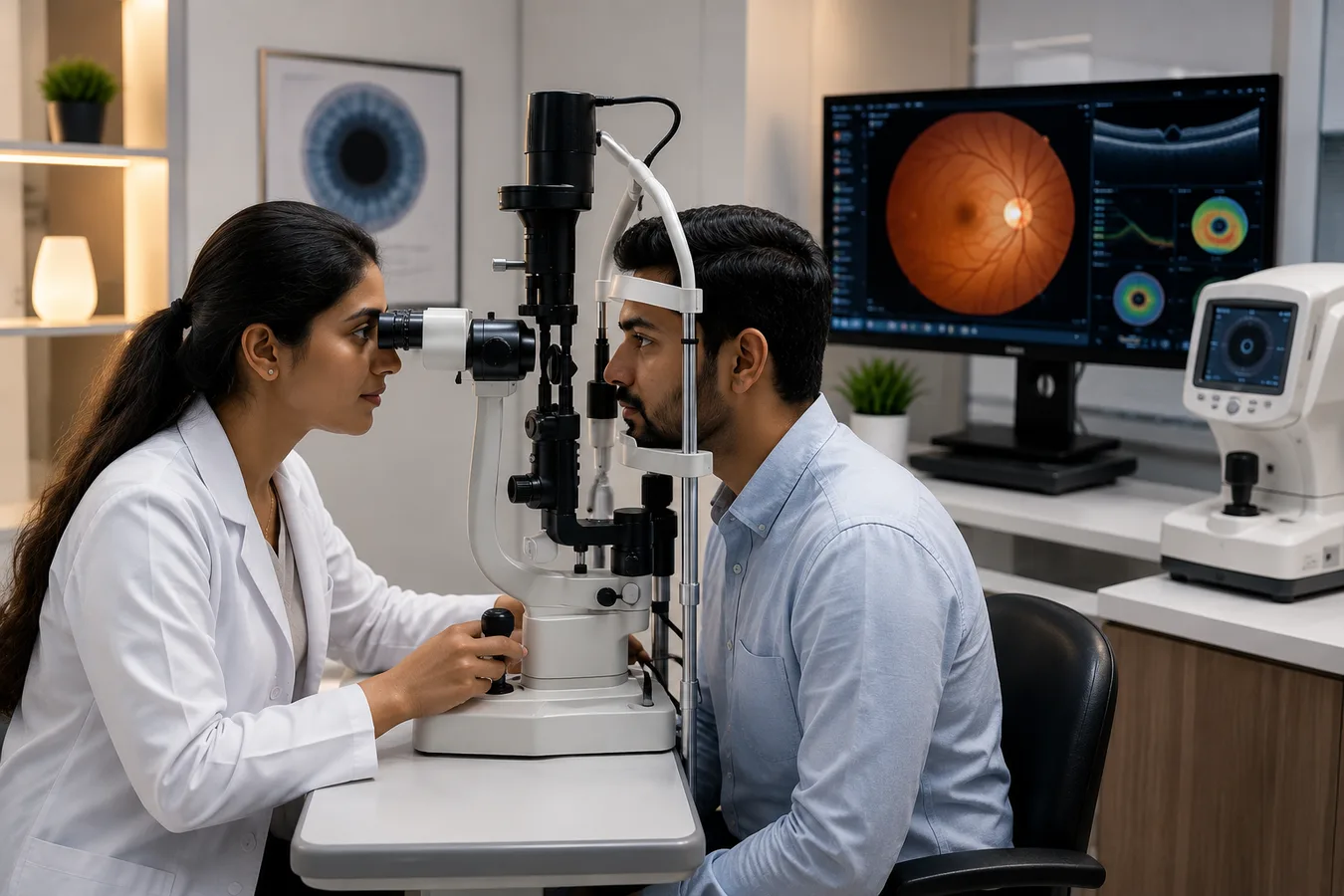
- Slit-lamp examination of the lens
- Eye-pressure and retinal evaluation
- Biometry and lens-power calculation when surgery is planned
- Additional tests if the retina or cornea needs closer assessment
Technology and clinical tools
- Phacoemulsification uses ultrasound energy to remove the cloudy lens through a small incision
- Biometry supports intraocular lens power calculation
- Foldable intraocular lenses are commonly used; suitability depends on examination and counselling
Specific equipment and procedure availability can vary by centre. SGVEH Champa can help coordinate network-based testing when recommended.
Treatment options
- Observation when vision remains functional
- Updated spectacles in early stages
- Cataract surgery when symptoms affect daily life
- Lens-option counselling based on eye health, visual needs and budget
Recovery and follow-up
Typical guidance
Many patients resume light routine activities within a few days, but vision and healing vary. Use prescribed drops, avoid rubbing the eye, keep water and dust away, and follow the surgeon’s activity restrictions.
Doctor’s advice
The right time for surgery depends on how cataract affects your daily activities—not only on the appearance of the cataract. A complete eye examination is needed before planning.
Patient FAQs
Surgery is usually considered when cataract affects reading, mobility, driving, work or daily independence and the eye is otherwise suitable.
Anaesthesia is used to reduce discomfort. Patients may feel pressure or mild irritation, but severe pain is not expected and should be reported.
Functional vision may improve within days, while complete healing takes longer. The surgeon will provide an individual follow-up and activity plan.
Cost depends on examination findings, surgical plan, lens choice and facility. A reliable estimate requires an eye examination and counselling.
The natural cloudy lens does not grow back. Some patients later develop clouding behind the implanted lens, which may be treated with a laser procedure if indicated.