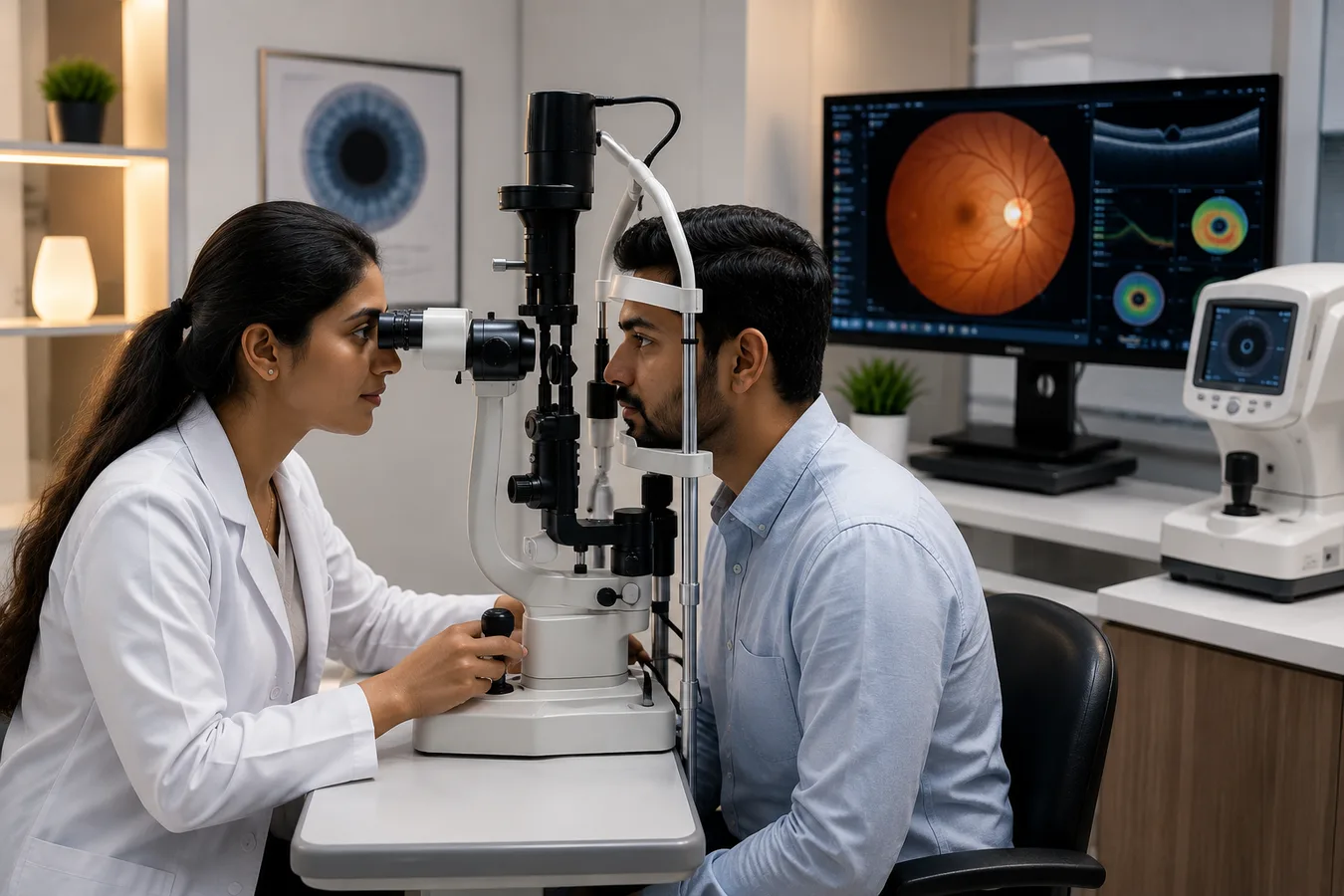
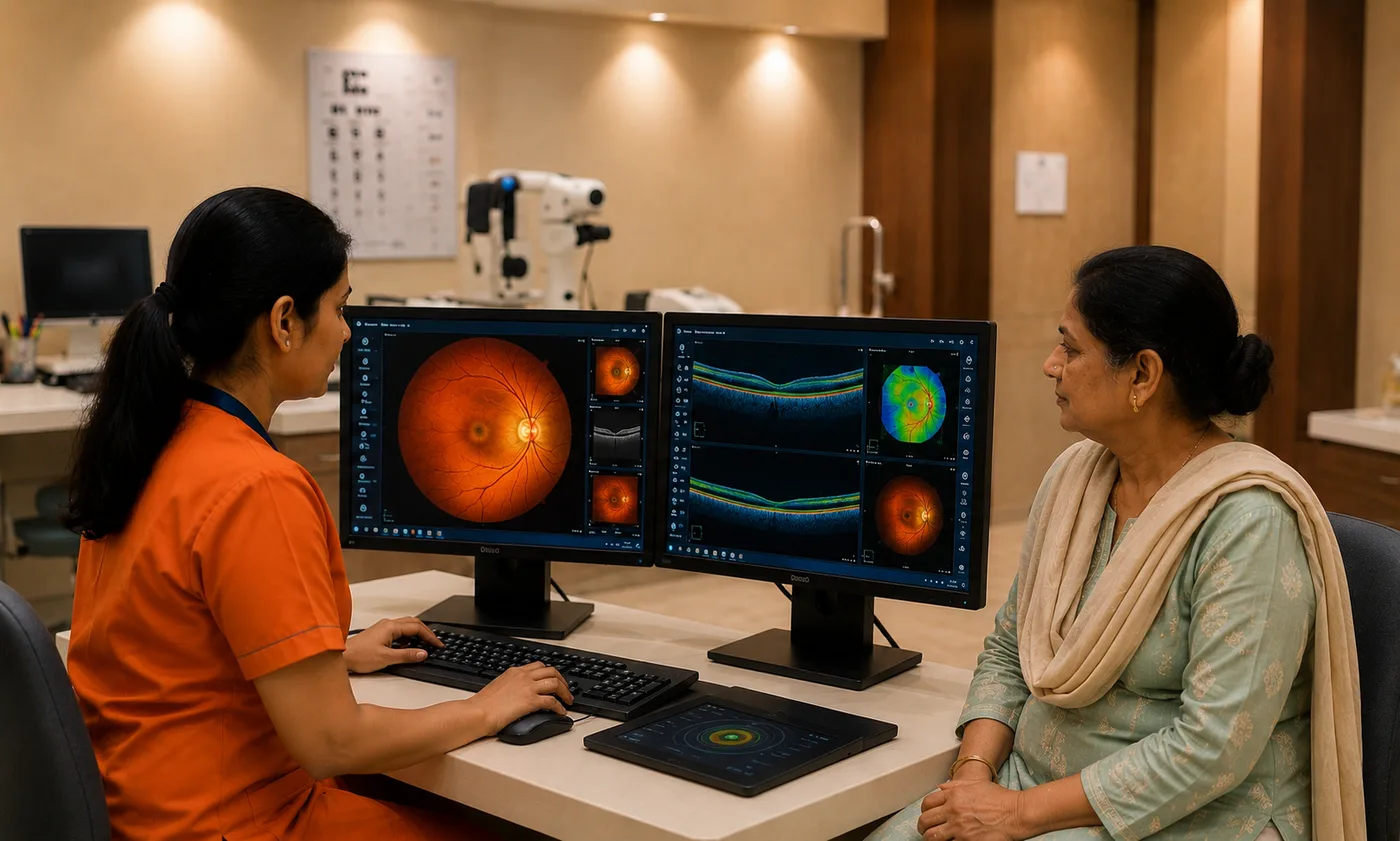
What is it?The retina is the light-sensitive tissue at the back of the eye. Conditions such as diabetic retinopathy, retinal tears and macular disease may require imaging, laser, injections or surgery.
Symptoms and warning signs
Arrange an eye examination when you notice symptoms such as:
- New flashes of light or sudden increase in floaters
- A curtain or shadow in vision
- Distorted or blurred central vision
- Sudden or gradual loss of vision
- Vision changes in a person with diabetes
Causes and risk factors
- Diabetes and poor long-term blood-sugar control
- Age-related retinal changes
- High myopia
- Retinal tears or detachment
- Vascular disease, inflammation or trauma
How diagnosis is made
The examination is tailored to the patient. It may include:
- Dilated retinal examination
- Fundus photography or angiography when indicated
- OCT imaging of retinal layers
- Ultrasound if the retina cannot be seen clearly
- Network referral for specialist retina assessment
Technology and clinical tools
- Retinal examination with diagnostic lenses
- Optical coherence tomography (OCT)
- Fundus angiography
- Retinal laser and intravitreal treatment pathways at appropriate network facilities
Specific equipment and procedure availability can vary by centre. SGVEH Champa can help coordinate network-based testing when recommended.
Treatment options
- Optimising diabetes and blood-pressure control
- Observation with scheduled follow-up
- Laser for selected retinal conditions
- Intravitreal injections when indicated
- Retinal surgery for detachment or other surgical conditions
Recovery and follow-up
Typical guidance
Recovery varies widely because retina treatments range from monitoring to injections, laser or surgery. Follow the retina specialist’s positioning, medicine and activity instructions carefully.
Doctor’s advice
Sudden flashes, many new floaters, a curtain-like shadow or sudden vision loss need urgent eye evaluation. Do not wait for symptoms to settle on their own.
Patient FAQs
The schedule depends on diabetes type, pregnancy, retinal findings and overall control. Many adults need at least periodic dilated examinations as advised by their eye doctor.
Yes. Early diabetic retinal changes can occur while vision feels normal.
New flashes, a sudden increase in floaters or a curtain-like shadow can indicate a retinal tear or detachment and require urgent evaluation.
Cost depends on whether OCT, angiography, laser, injections or surgery are required. An examination is needed before estimating.